Biomedical Engineering, Medicine, Public Health, Open Source, Structural Solutions
16081 stories
·
228 followers

Google Chrome is killing all uBlock Origin bypasses, Microsoft Edge, Opera to follow

1 Comment

For a while now the transition away from Manifest V2 (MV2) to MV3 has been on-going and it looks like it is entering its final phase of deprecation, at least, in the case of Google Chrome. A recent discussion thread in the w3c WebExtensions Community Group GitHub repo has highlighted how the latest and upcoming versions of the most popular browser are expected to be its final releases with support for MV2 extensions.

↫ Sayan Sen at Neowin

You shouldn’t be using Chrome anyway.

Read the whole story
satadru
29 minutes ago
reply
This is why I've entirely switched to Firefox at this point. ublock origin is supported for Firefox on the desktop and on Android...
New York, NY
Share this story
Delete

Once again, Apple blatantly lies about the EU’s DMA

1 Share

Apple recently announced its next crack at integrating “AI” into its operating systems, this time opting to simply whitelabel Google’s Gemini “AI” tools instead of developing its own LLM technology. Called “Siri AI”, Apple also stated it’s not coming to the EU, and the company stated that’s because the EU’s basic consumer protection legislation would give other “AI” tools “unprecedented access” to user data on users’ devices. The company made a big stink about this in the press.

As anyone with basic pattern recognition skills already knew, this was a blatant, baldfaced lie. What really happened is that Apple asked the EU for an 18-month long exemption from the EU’s consumer protection and privacy legislation during which it would not have to comply with any legal privacy and interoperability requirements – just so it could roll out Siri “AI” before anyone else could offer a competing product for Apple users.

Obviously, the EU wasn’t going to grant such an exemption.

“The decision not to roll out Siri AI in the EU is Apple’s and Apple’s only,” spokesperson Thomas Regnier told reporters in Brussels, saying there was nothing in the Digital Markets Act to stop the company from introducing new products in the EU.

“Apple was simply unable to develop interoperability solutions that meet essential EU ​privacy and security standards,” Regnier said.

“Instead ​of trying to find ⁠a suitable compliance solution, Apple simply made a request to the European Commission to be exempted from their interoperability obligations under the DMA – and this for at least 18 months. ​That’s not an option,” Regnier said.

↫ Inti Landauro and Foo Yun Chee at Reuters

So what’s really going on here is that Apple wants to offer a set of whitelabeled Google Gemini tools on iOS and macOS in the EU, but because Apple is classified as a gatekeeper, it is legally obligated to offer interoperability options for competing “AI” tools. These options in turn need to adhere to the EU’s strict privacy regulations, so that competing “AI” tools can offer the same level of privacy that Apple’s own whitelabeled Google Gemini tools claim to offer.

Apple didn’t want to offer these privacy-respecting interoperability options as required by law, so instead of following the law in the countries it wants to operate in, Apple asked to be placed above the law for at least 18 months, basically giving Siri “AI” a massive head-start over possible competitors so that it could entrench itself in the userbase. The EU saw right through Apple’s nonsense, and now called them out on their bullshit. Perhaps Apple has gotten so used to openly bribing Trump that they forgot other parts of the world don’t work that way.

Whenever Apple and its PR attack dogs say anything about the EU, you can be assured they are lying. They have proven time and time again to basically never speak a single word of truth when it comes to its dealings in the EU. It’s almost pathological at this point, and what makes it doubly interesting is that Apple will not launch Siri “AI” in China either, for the very same regulatory reasons – yet all China got was a single footnote in a press release.

I wonder why.

Read the whole story
satadru
29 minutes ago
reply
New York, NY
Share this story
Delete

A Vertical Coat Rack with a Nifty Assembly Method

1 Comment

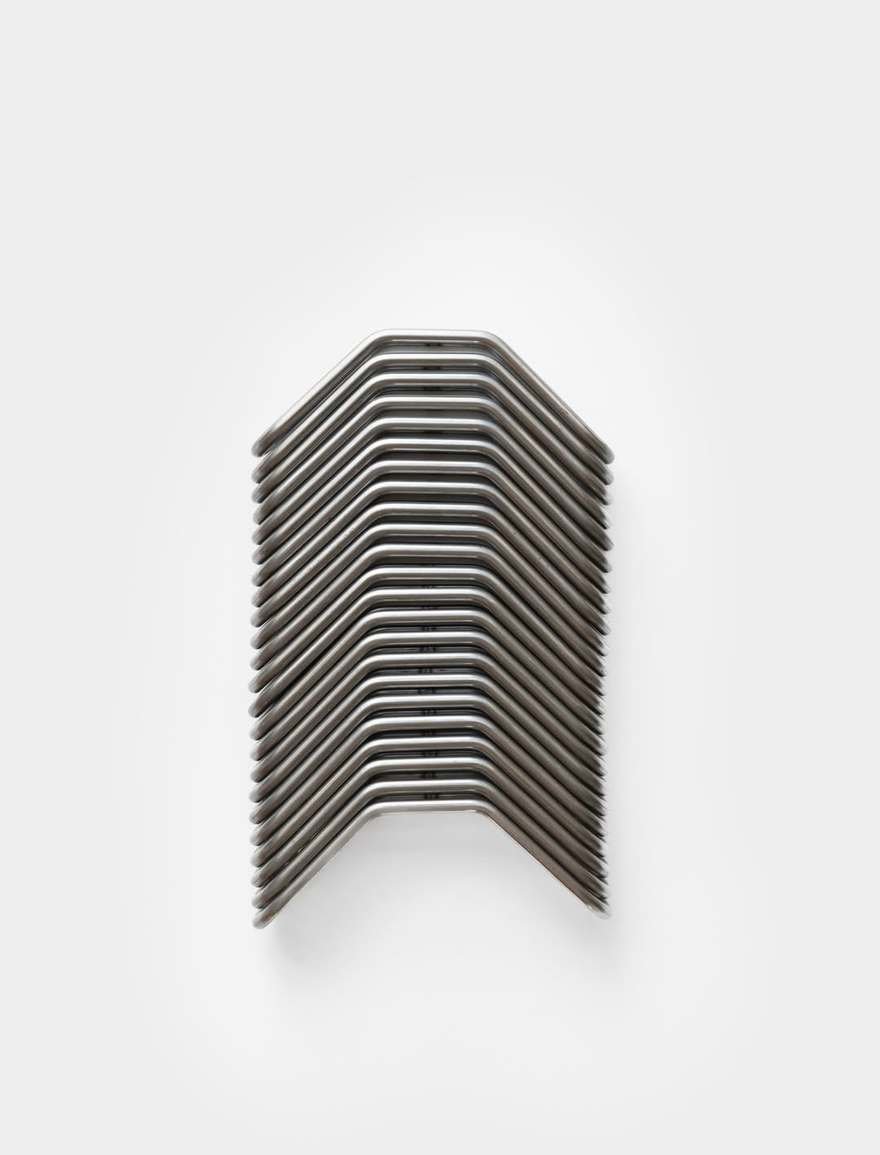
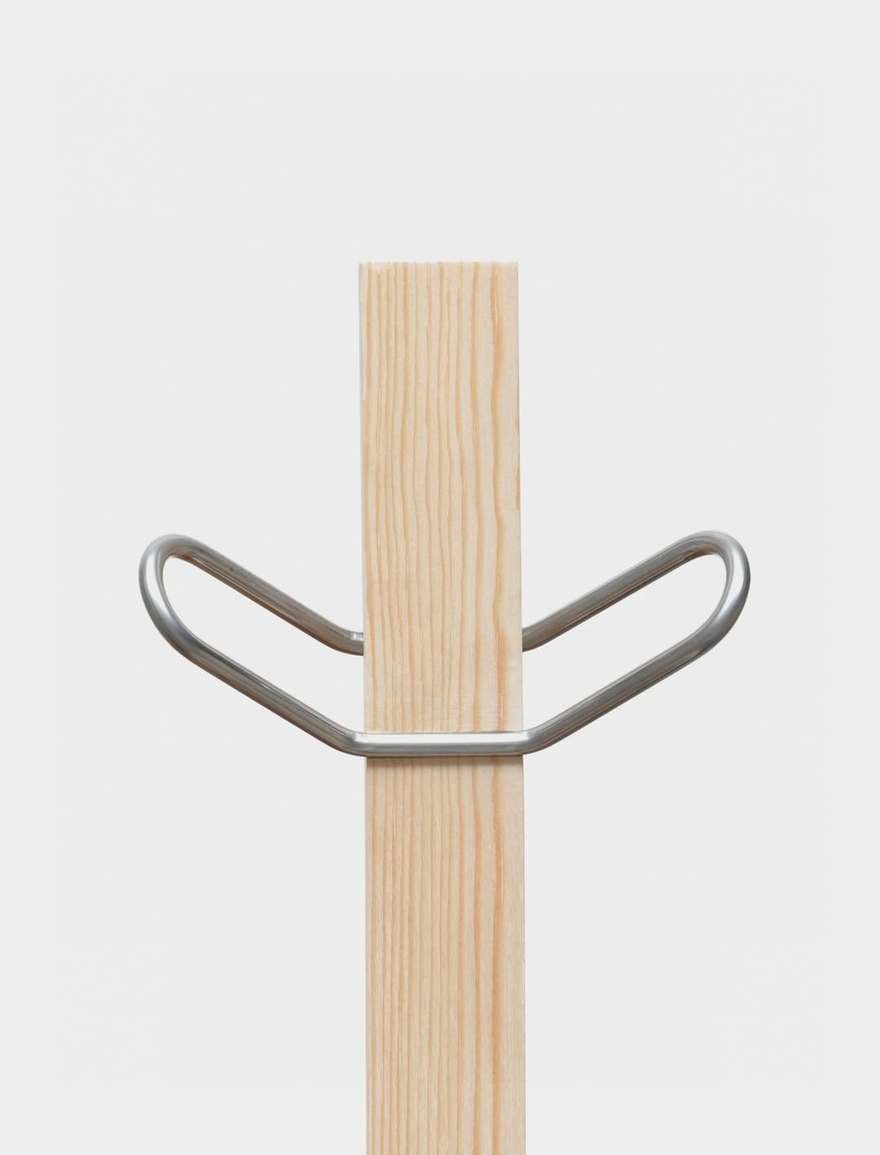
Wall-mounted coat racks should be horizontal, for the sake of UX. But tight European apartments often don't have the space. Industrial designers Oskar Lillo and Juliette Guéganton thus designed this Vertical coat rack, which sacrifices some UX in order to deal with space constraints:

The assembly method is quite nifty:

The piece was created for design exhibition platform Objects May Vary, which invited several designers to explore the typology of the coat rack. The attendant exhibition takes place this week at Copenhagen's 3 Days of Design.


Read the whole story
satadru
1 day ago
reply
Want.
New York, NY
Share this story
Delete

German court rules Google is liable for whatever Google’s “AI” generates

1 Comment

It’s just a ruling from a lower court, but it sets the stage for how European courts are going to deal with the question of who is liable for whatever slop “AI” generates.

The Regional Court of Munich hit Google with a temporary injunction barring the company from spreading false claims about two Munich-based publishers through its AI-generated search overviews (case no. 26 O 869/26). The court classified Google as a direct infringer because the “AI overview” is its own content, not just a list of search results.

Google’s AI overviews had falsely tied two publishing companies to scams, subscription traps, and shady business practices for certain search queries. According to the court, the AI mixed up information about other, genuinely sketchy companies with the plaintiffs and drew connections that didn’t appear in any of the linked sources. The publishers sent Google a cease-and-desist letter, but Google didn’t respond appropriately.

↫ Matthias Bastian at The Decoder

Google tried to argue it doesn’t carry any responsibility or liability for whatever slop its “AI” generate, but the German court does not agree. According to the court, “AI” overviews are not the same as regular search results, because they rewrite findings and just make shit up, thereby making claims that are nowhere to be found in any search results (or in reality in general). Furthermore, the court states that Google develops the “AI”, it runs it, it offers it to users, and Google alone controls its output, and as such, Google is liable for whatever their “AI” produces.

Google also tried to argue that users know not to trust anything an “AI” produces, which is hilarious considering how hard Google is pushing these tools, but the courts state that the ability of users to do further research does not absolve Google of liability. In addition, the court made it very clear that free speech protections absolutely do not apply, because the “AI” expressions are coming from an algorithm, not a person, and are above all an expression of Google’s business activities”.

In other words, if an “AI” tool generates false accusations and misleading statements, the creator of said “AI” is liable. With this ruling in hand, countless other people have a stronger case to make whenever Google or any other company tries to absolve itself from liability from slop just because a pachinko machine generated it.

Excellent news, and the only fair outcome.

Read the whole story
satadru
1 day ago
reply
AI is child labor, you see...


Wait, maybe this isn't the best argument.
New York, NY
Share this story
Delete

Optimizing Pancakes from Chemical Principles

1 Comment
Three brown pancakes are sitting in a frying pan.

Although parents and teachers like to point out the deep link between cooking and chemistry, most people don’t deliberately apply any chemical principles beyond acid/base reactions to their recipes. Not so [Ben Kazez]: he’s written a thorough exploration of the chemical journey to the perfect pancake, and made a calculator for others to use with their own ingredients.

The goal is to optimize the pancakes along four dimensions: interior texture (light and smooth), a tangy flavour, rise, and a crisp, brown exterior layer. The tang comes from residual acids, and since lactic acid produces the best taste, dairy-based acid sources (such as Greek yoghurt or buttermilk) are preferable. Acids also react with baking soda to release carbon dioxide, making them a part of one of the four rising agents. The other three are carbon dioxide released when double-acting baking powder is heated, steam released from the batter, and air bubbles stabilized by egg white foam.

Dairy products, besides contributing acid, also provide a protein structure to keep the interior smooth. In a normal wheat-heavy pancake, two proteins (glutenin and gliadin) interact to form tough strands of gluten. Fats bind to hydrophobic amino acids in these proteins and shorten the gluten chains, hence the name shortening. Adding ricotta cheese also replaces some of this gluten network with a smoother structure of previously-denatured dairy proteins. Dairy products also contribute to the Maillard reaction between reducing sugars (such as lactose, glucose, and fructose) and amino acids, which causes the browning of the pancake’s surface. Besides being brown, the surface should be crisp; since amylose, found in corn starch, forms a brittle, glassy, crackly network when dehydrated, corn starch was added.

The result is a set of chemical equations which can be tuned to create perfect pancakes, combined in the calculator. This summary doesn’t do justice to the depth of the research here; [Ben] also investigated optimal batter resting times, fermentation, cooking fats, cooking surfaces, and spatula properties. If all this has you interested in more about dairy proteins, check out our article on cheesemaking.

Featured image: “Buttermilk pancakes from a recipe by Darina Allen” by [Didym]. 

Read the whole story
satadru
1 day ago
reply
This fucking treatise on the science of cooking pancakes linked here is absolutely delightful.
New York, NY
Share this story
Delete

Why Sardinians Are Fighting the Renewable Energy Transition

1 Share


“Not in my backyard” is the rallying cry of citizens everywhere resisting projects proposed for their locality. Whether it’s affordable housing, a waste treatment plant, or a new data center, they may recognize the benefit of the activity. They just don’t want it near them. And the roots of that resistance differ from place to place. When it comes to the ongoing transition from fossil fuels to renewables, companies and policymakers need to know where, exactly, people are coming from.

The Italian island of Sardinia is a textbook example. As IEEE Spectrum’s power and energy editor Emily Waltz discovered when she traveled there last October, Sardinian opposition to wind and solar projects runs deep. It spurred a quarter of the voting population to queue up in public squares in 2024 to sign a petition banning all construction of renewable energy.

Waltz was surprised. She went there to see a promising new grid-scale energy storage system that uses domes inflated with carbon dioxide. While reporting on that project, she interviewed residents, engineers, activists, and professors about their attitudes toward climate change and the Italian government’s grand plans for renewable energy on the island. And Waltz soon learned of Sardinians’ profound antipathy toward renewable energy and its deep ties to a history of invasion, occupation, and exploitation stretching back 2,700 years.

It started with the Phoenicians and then extended through the Romans, the Byzantines, and the Iberians. Sardinia was absorbed into a newly unified Italy in 1861, and it became an autonomous region of Italy in 1948. The island’s population is justifiably suspicious of outsiders, including the Italian government. “When you’re in Sardinia, the weight of history—you can feel it like in the air,” Waltz told me. “And it gets passed down from one generation to the next.”

Now, Italy needs Sardinia to produce even more power to meet the country’s climate goals—something that Sardinians see as Rome’s problem, not theirs. “Sardinia already exports about 30 percent of its electricity. It’s not like they need more,” Waltz says. “So it’s hard to make the case to build, build, build.”

The result of Waltz’s old-fashioned shoe leather reporting is this month’s cover story. She notes that the Sardinians she talked to aren’t climate-change deniers, and they don’t object to renewables per se. They just don’t like the way corporations and Italian policymakers are trying to plug into Sardinia like it’s one giant battery rather than the home of an ancient and proud people.

“I think Sardinians would be more receptive to renewable projects if it was more of a ground-up, grassroots approach,” Waltz says. Indeed, this homegrown approach is already working in some places in Sardinia. She knows of more than 50 projects, called energy communities, where the residents are deploying renewables themselves. The idea also holds promise for other places struggling to get locals to buy into the renewable-energy transition.

The Sardinian experience is both a cautionary tale and a blueprint. Ignore the weight of history that communities carry and your project risks failure. Meet the people where they are and you might just get somewhere. The same lesson applies whether you’re in Sulawesi or sub-Saharan Africa. You just have to show up to learn it.
Read the whole story
satadru
4 days ago
reply
New York, NY
Share this story
Delete
Next Page of Stories