Biomedical Engineering, Medicine, Public Health, Open Source, Structural Solutions
15978 stories
·
226 followers

First look: Also's upcoming e-bike disconnects the pedals and wheels

1 Comment

The company bets that software can create a distinct—and better—riding experience.

E-bikes have started to blur what was once a basic feature of cycling: you push the pedals, which turns the wheels. Now, with throttles, you only have to pedal some of the time. And in mid-drive motors, the force you generate through pedaling is routed through a complex set of gearing and is merged with a motor’s output. The once-direct connection between your legs and the rear wheel has become much less straightforward.

An electric bicycle startup called Also wants to obliterate that connection entirely. When you pedal its bike, you’re turning a generator. The power you produce, perhaps with additional juice from a battery, is sent to a motor, which turns the wheels. How much this feels like a normal bicycle is determined entirely by software, which controls crank resistance and converts the force you’re generating into motor power.

Also says its software will convince you that you’re just pedaling a regular old bike most of the time. And when it doesn’t feel like that, it’s because the software can provide a better experience.
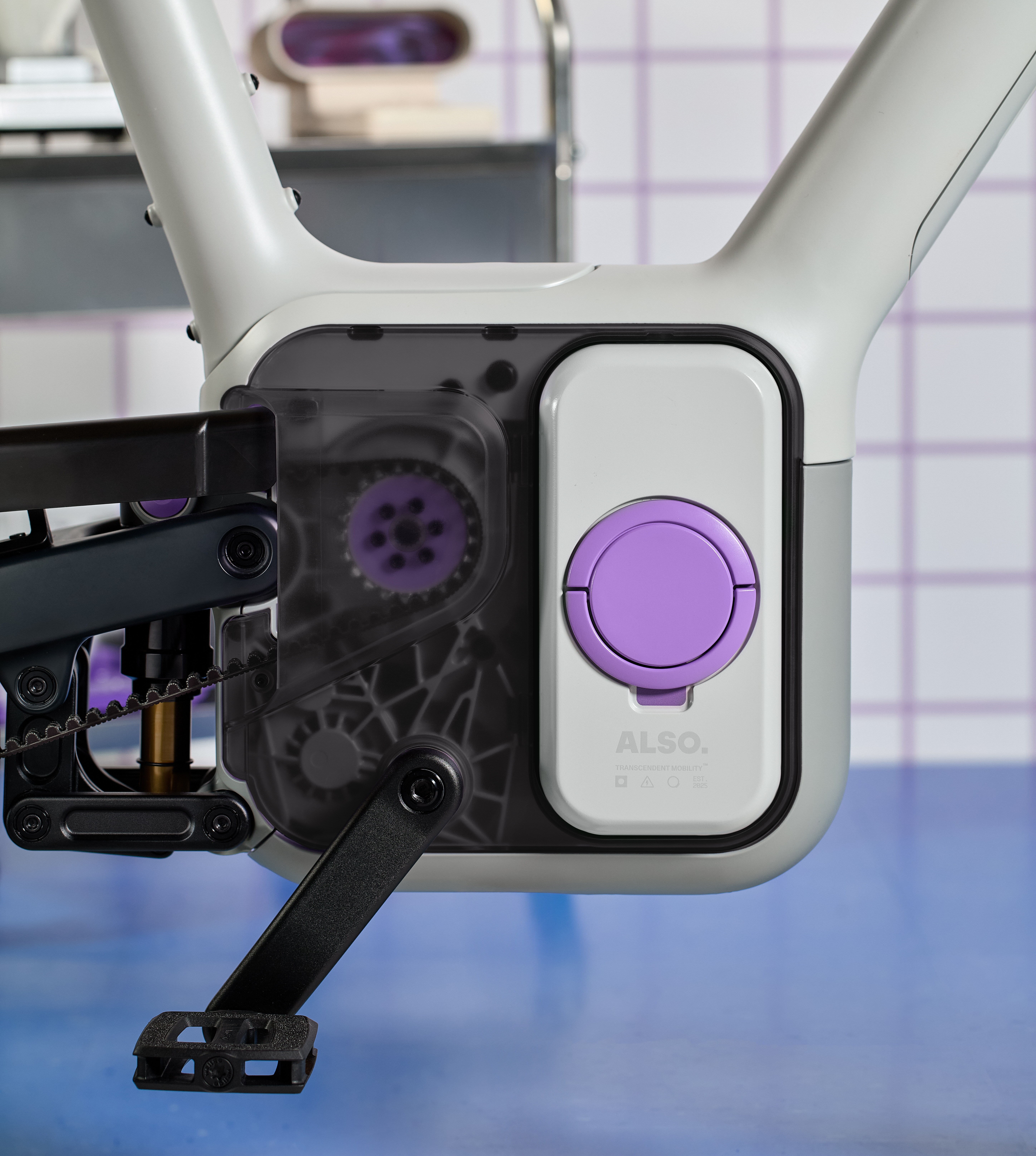
Some of the key features of the TM-B: A rear suspension (vertical cylinder at left) and belt drive, a swappable seat and support (upper left), and a central generator/motor/battery pack.

Credit: Also

Some of the key features of the TM-B: A rear suspension (vertical cylinder at left) and belt drive, a swappable seat and support (upper left), and a central generator/motor/battery pack. Credit: Also

Ars took a brief ride on a pre-production version of the company’s first bicycle and spoke with the team preparing it for release. There’s more to test in a full review, but we can safely say that Also appears to deliver on its promise. Most of the time, it feels like a normal bike, but push it harder, and it shifts into something radically different. That difference feels like an improvement.

Building a new kind of bicycle

Also is headquartered down the street from Rivian, the electric car company that helped launch it. It’s a building filled with the partial carcasses of the bike the company will be launching, the TM-B, so there is no mistaking it for a car company. Saul Leiken, the company’s director of product line, told me there is some cross-pollination—for example, the bike’s battery uses the same cells as a Rivian’s, just at a lower density. But the biggest overlap appears to be conceptual.

Chris Yu, Also’s president, said the idea took shape during conversations with people at Rivian. In an electric vehicle, he noted, software ultimately determines the vehicle’s behavior, as it sits between the driver’s inputs and the hardware that carries them out. Also was founded on the premise that other forms of transportation could benefit from the same approach.

Leiken said the biggest challenge was avoiding an uncanny valley effect: Riders come in with an ingrained sense of how riding a bike should feel, and straying too far from that might feel unnatural. At the same time, the promise of an electric bike is that it can enable rides that might otherwise be difficult or impossible for average people.

To find a balance, Also is making the whole widget (a philosophy it shares with Rivian). Its central motor assembly is housed in cast magnesium that plays a key structural role; both the generator and motor within it are custom-designed for the TM-B (Leiken said many e-bike motors are repurposed power steering units). The battery also sits within this square assembly. A handful of standard parts, like the shocks and belt, are contracted out to regular cycling manufacturers, but much of what makes the TM-B distinct is done in-house.
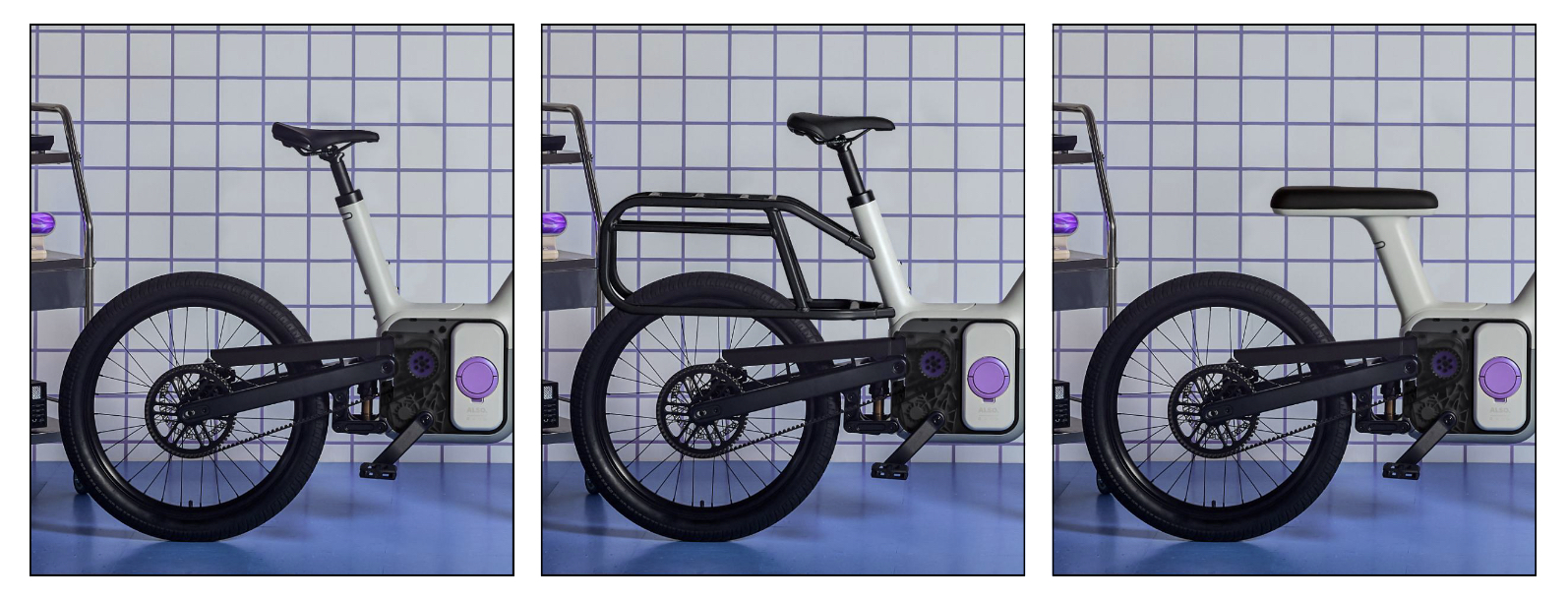
Three images of the same bike, each with a different seat.

The seat assembly can be swapped out, providing a bit of flexibility to the bike.

Credit: Also

The seat assembly can be swapped out, providing a bit of flexibility to the bike. Credit: Also

Another distinction is its saddle and seatpost, which form a unit that plugs into a corner of the square motor/battery assembly. Also offers several options here—bench seating, a seat plus a cargo rack, or a sporty saddle—each built into a seating unit that power-locks into place, no tools required. Electronics in the seat enable user presets, letting a single bike body serve as two distinct setups. Switch between them in less than a minute by popping out one seat and inserting the other.

There’s also plenty of more conventional hardware, like lights and front fork shocks. Other features land somewhere in the middle, including a high-pivot rear suspension for cushioning against potholes and handling light trail use, as well as turn signals. The result is a bike that looks unusual but feels like a cohesive design.

That sense of cohesion likely comes from extensive prototyping. Also has a “museum” that includes the first test units, including one with a frame that let engineers vary the geometry to test different configurations (Leiken said the company ended up with something similar to a trail bike). The shop is full of in-house production tools like lathes and 3D printers, alongside automated endurance-testing machines. We saw hardware that can turn cranks with ankle-like motion or repeatedly run the wheels over a model of rough pavement.

Ultimately, the TM-B will be built in Taiwan, but it will be built using Also-owned machinery by Also-trained staff.

The software

There are two key aspects to an e-bike’s software, both central to the riding experience: the user interface and the motor control software. The former is what exposes the technology to the user, and Also has made its own. It’s a lot to take in at first, with multiple screens covering everything from basic ride stats to music from a paired smartphone. Options on each screen can be navigated through a mix of screen rotation, touch input, and handlebar-mounted buttons.

Overall, the UI was too much to take in during my short time with the bike. That’s not the screen’s fault; it was bright enough to be visible through sunglasses on a very sunny day. It just seems like a system that will require you to read the owner’s manual to learn all the features.

I’ll credit the company for attempting something both distinctive and comprehensive, but it will take more time to determine how it works in practice. Besides, after my ride, we ran into Yu, the company’s president, who said the demo bike was already two hardware and three software iterations behind the current version.

In any case, the TM-B defining feature is the software that sits between the cranks and the motor, shaping the whole cycling experience. Did Also avoid the uncanny valley?

To a large extent, yes. Once you find the right combination of settings and cadence, cruising down the street feels just like it does on any other bike. It’s impossible to tell that all your legs are doing is driving a generator and sending signals to a sensor or two.

But it didn’t take much to uncover behavior that felt very different. On a normal bike, a sudden mash on the pedals can often produce a short burst of acceleration followed by a spinout while shifting. On the TM-B, the software adjusts the resistance from the generator nearly instantly so it becomes much harder to pedal, all while boosting power to the motor.
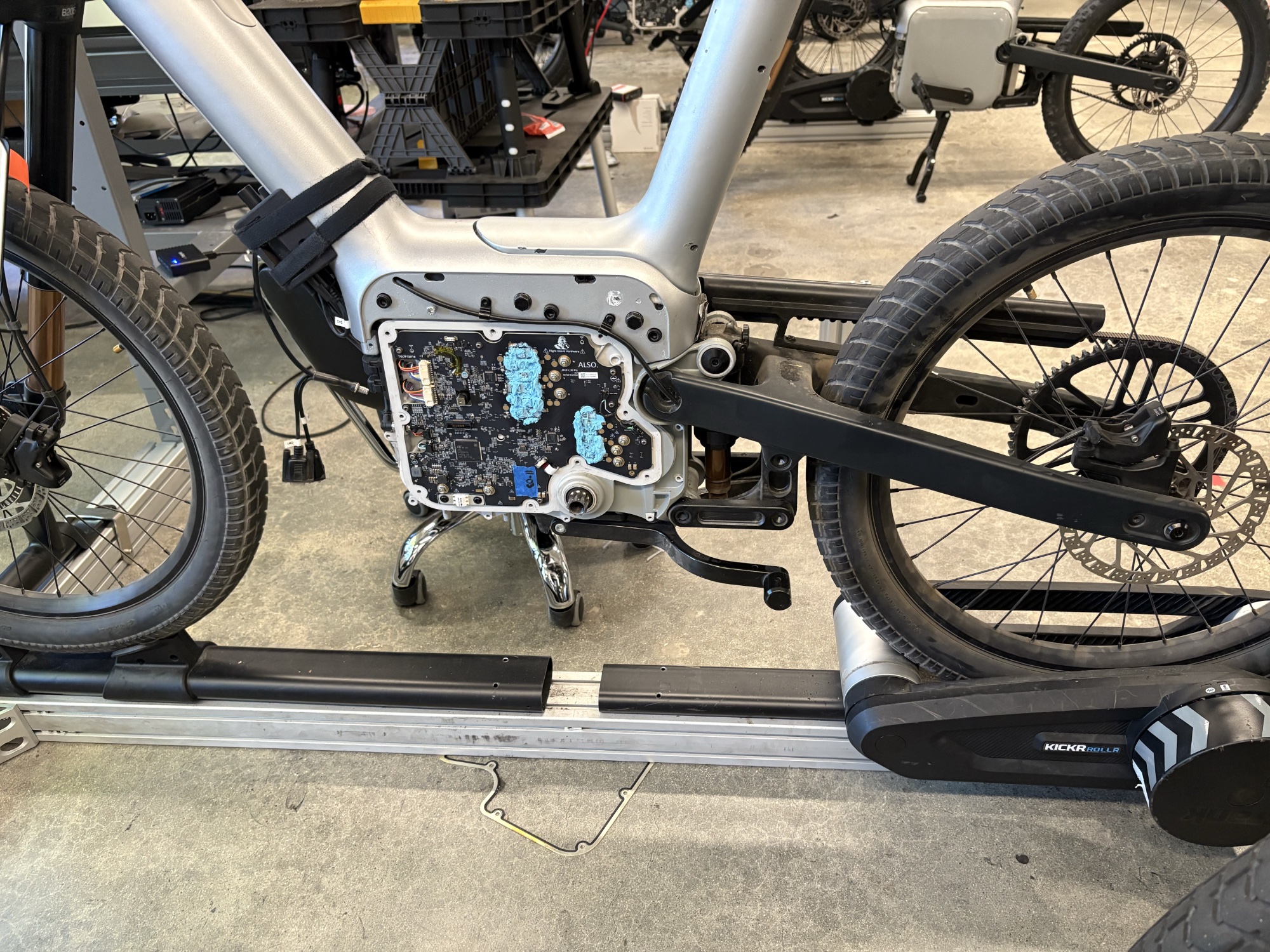
Much of the TM-B’s behavior is defined by its electronics.

Credit: John Timmer

Much of the TM-B’s behavior is defined by its electronics. Credit: John Timmer

In short, it did what I normally would have by shifting gears and adjusting cadence and force—and it did so very quickly, without requiring any intervention. It was a bit like having an automatic transmission on a bike.

The TM-B also avoided a problem I occasionally have on normal bikes: shifting into a gear my legs weren’t ready for. As soon as I started easing off the force I was supplying even slightly, the hardware responded by making it somewhat easier to pedal.

That doesn’t mean you can forget about shifting. There are two ways to set the assist, each with 10 settings. I didn’t have enough time to fully explore how they change the ride, nor did I run the battery flat to experience what Also calls “limp” mode, where you’re directly powering the motor with no battery assist. There’s still plenty to cover in the review.

Still, I came away with the sense that Also has put a lot of thought and effort into the TM-B, resulting in one of the most distinct riding experiences I’ve had, easily surpassing the continuous variable transmission bike I tested last year. And at least on an initial ride, it doesn’t feel like a case of Silicon Valley reinventing things that didn’t need it. The goal isn’t to replace every bike, and the design does seem to offer some real benefits.

In a field where most changes are evolutionary, it’s nice to see a company do a more fundamental rethink.

Photo of John Timmer

John is Ars Technica's science editor. He has a Bachelor of Arts in Biochemistry from Columbia University, and a Ph.D. in Molecular and Cell Biology from the University of California, Berkeley. When physically separated from his keyboard, he tends to seek out a bicycle, or a scenic location for communing with his hiking boots.


11 Comments

Read the whole story
satadru
17 hours ago
reply
Always nice to see an American company engaged in hardware innovation that doesn't involve AI.
New York, NY
gdthedevil
17 hours ago
Totally agree
Share this story
Delete

Saturday Morning Breakfast Cereal - Witch

2 Shares


Click here to go see the bonus panel!

Hovertext:
She immediately starts building a child-size oven in a house made of candy.


Today's News:


Red Button mashing provided by SMBC RSS Plus. If you consume this comic through RSS, you may want to support Zach's Patreon for like a $1 or something at least especially since this is scraping the site deeper than provided.
Read the whole story
mareino
2 days ago
reply
Washington, District of Columbia
satadru
2 days ago
reply
New York, NY
Share this story
Delete

Reverse-Engineering Human Cognition and Decision Making in a Modern Age

1 Comment

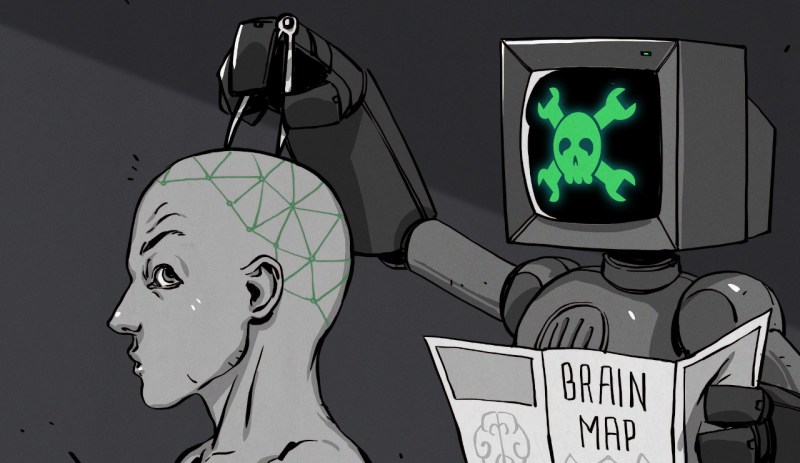
Cognitive processes are not something that we generally pay much attention to until something goes wrong, but they cover the entire scope of us ingesting sensory information, the processing and recalling thereof, as well as any resulting decisions made based on such internal deliberation.

Within that context there has also long been a struggle between those who feel that it’s fine for humans to rely on available technologies to make tasks like information recall and calculations easier, and those who insist that a human should be perfectly capable of doing such tasks without any assistance. Plato argued that reading and writing hurt our ability to memorize, and for the longest time it was deemed inappropriate for students to even consider taking one of those newfangled digital calculators into an exam, while now we have many arguing that using an ‘AI’ is the equivalent of using a calculator.

At the root of this conundrum lies the distinction between that which enhances and that which hampers human cognition. When does one merely offload tasks to a device or object, and when does one harm one’s own cognition?

Surrender Versus Offloading

Cognitive offloading is the practice of shifting cognitive tasks to external aids, and it is thought to make learning complex tasks easier. In contrast to rote memorization of facts like dates of events and formulas, if we consider books to be an external memory storage device, then we can offload such precise memorization to their pages and only require from students that they are capable of efficiently finding information, as well as the judging of these on their merits.

An often misquoted anecdote here pertains to Albert Einstein, who was was once asked why he couldn’t cite the speed of sound from memory. To this he responded with a curt:

[I do not] carry such information in my mind since it is readily available in books. …The value of a college education is not the learning of many facts but the training of the mind to think.

With this statement Einstein makes a clear case for the benefits of cognitive offloading in the sense that rote memorization does not enhance one’s cognition. Similarly, the ability to solve complicated equations and sums without so much as the use of pen and paper is fairly irrelevant when a slide rule and a digital calculator can offload all that work. As a benefit these devices tend to be more precise, faster and very accessible.

It is still important to have an intuitive feeling for whether a calculation is in the expected range, and one should never assume that what is written in a book is the absolute truth. That in a nutshell is the key difference between cognitive offloading and cognitive surrender. If you have entered a series of values into your calculator, the result seems off and you re-type them to be sure, that’s cognitive offloading.

If, however, you accept the outcome of such a calculation, or a text as written without a second thought, that constitutes surrendering an essential part of your cognitive processes to an external source. If we thus replace ‘calculator’ in this context with ‘LLM chatbot’ or an ‘AI summary’, the same caveat applies. Perhaps more so as at least a calculator is fully deterministic and can be proven to be mathematically correct.

So if that’s the case, and modern-day ‘AI’ isn’t really what it’s often cracked up to be, why would a presumably intelligent human being end up accepting their outputs like the literal gospel?

External Cognition

A recent study (DOI link) by Steven D. Shaw and Gideon Nave of the University of Pennsylvania investigated the prevalence of cognitive surrender in the context of LLM chatbots, looking for instances where users are seen to blindly accept the generated answers.

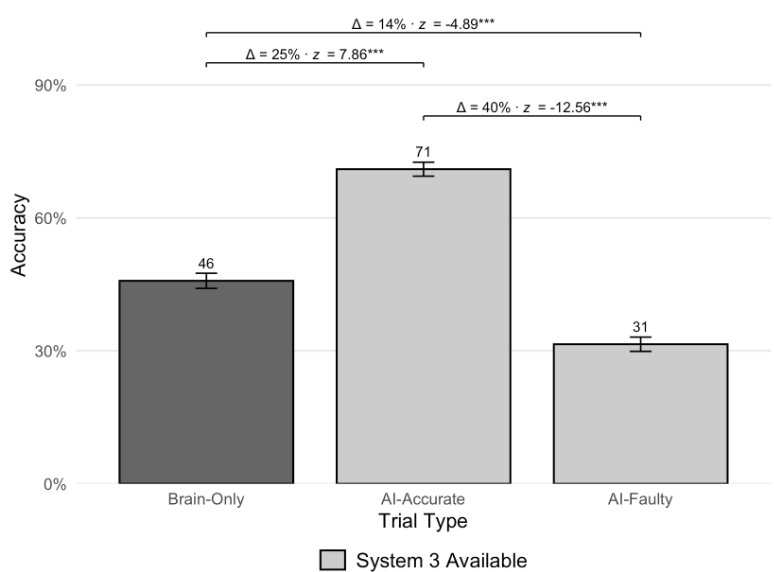
In this study, Shaw et al. had three groups of volunteers take a standardized test, during which one group had to rely purely on their own wits, the second group could use an LLM chatbot which gave correct answers, while a third group also had access to this chatbot, but for them it gave wrong answers.

System 3 facilitates cognitive surrender. (Credit: Shaw et al., 2026)

Perhaps unsurprisingly, the test subjects used the chatbot quite a lot when available, with predictable results. In the ‘tri-system theory of cognition’ that Shaw et al. propose in the paper, the external cognitive system (‘System 3’) is that of the chatbot, whose output is clearly being accepted verbatim by a significant part of the test subjects. If said chatbot output is correct, this is great, but when it’s not, the test results massively suffer.

Where this is worrisome outside of such a self-contained tests is that people are exposed to endless amounts of faulty LLM-generated text, such as for example in the form of ‘AI summaries’ that search engines love to put front and center these days. Back in 2024, for example, Avram Piltch over at Tom’s Hardware compiled a amusing collection of such faulty outputs, some of which are easier to spot than others.

Ranging from the health effects of eating nose pickings to the speed difference between USB 3.2 Gen 1 and USB 3.0, to classics like adding Elmer’s glue to pizza sauce, it’s generally possible to find where on the internet a ridiculous claim was scraped from for the LLM’s dataset, while other types of faulty output are simply due to an LLM not possessing any intelligence or essentials like grasping what a context is.

Meanwhile other types of output are clearly confabulations, a fact which ought to be obvious to any intelligent human being, and yet it seems that so much of it passes whatever sniff test occurs within the cognitive capabilities of the average person.

Making Decisions

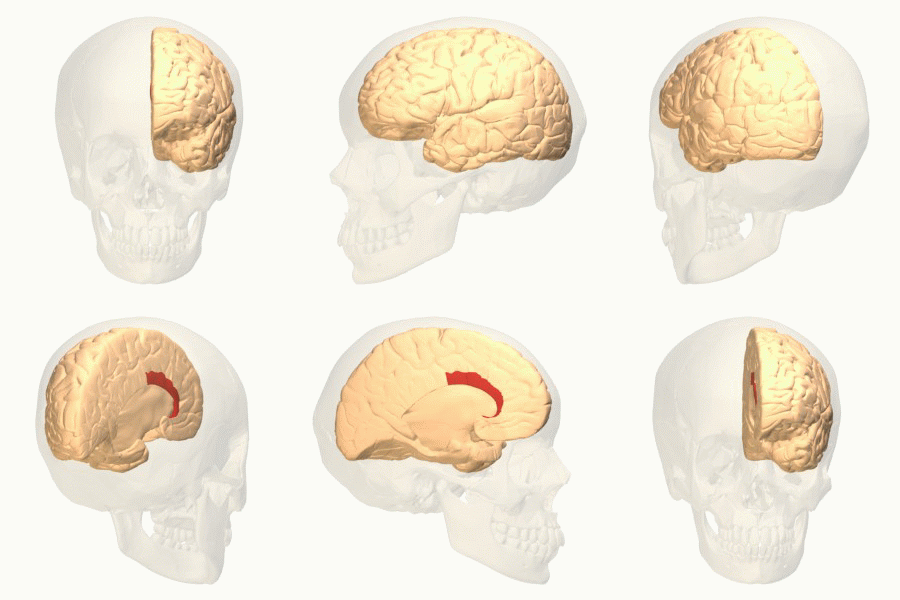
Anterior cingulate gyrus. (Credit: BodyParts3D, Wikimedia)

In the generally accepted model of cognitive decision making we see two internal systems: the first is the fast, intuitive and emotion-driven system. The second is the deliberate and analytical system, which tends to take a backseat to the first system in general, but could be said to be checking the homework of the first.

Although psychology is hardly an exact science, in the scientific fields of systems neuroscience and cognitive neuroscience we can find evidence for how decisions are made in the primate brain – including those of humans – with various cortices involved in the decision-making process. Fascinating here is the activity observed in the parietal cortex where a decision is not only formed, but also apparently assigned a degree of confidence.

Lesions in the anterior cingulate cortex (ACC) have been linked to impaired decision making and the arisal of impulse control issues, as the ACC appears to be instrumental in error detection. Issues in the ACC are thus more likely to result in faulty or flawed decisions and judgements passing by uncorrected. Incidentally, the ACC was found to be heavily affected by environmental tetraethyl lead contamination, underlying the theory that leaded gasoline was responsible for a surge in crime until this additive was discontinued.

Knowing this, we can thus say with a fairly high degree of confidence that the concept of human cognition is very much determined by the physical wiring in the pinkish-white goo that constitutes our brains. A good demonstration of this is the effect of ethanol on the brain, as well as the intense cravings that accompany addictions.

Implanted electrodes in the rostrodorsal anterior cingulate cortex (rdACC) for alcoholism treatment. (Credit: Sook Ling Leong et al., 2020, Neurotherapeutics)

Abnormal activity in the ACC has for example been associated with alcohol addiction, with an implant suggested to adjust said neural activity as detailed in a 2020 Neurotherapeutics study by Sook Ling Leong et al. In this study the eight treatment-resistant alcoholics had electrodes inserted into part of their ACC to provide direct stimulation, leading to a self-reported 60% drop in cravings.

As ethanol can freely pass through the blood-brain barrier, it is free to start binding with GABA receptors and induce the release of dopamine along with a range of other neurological effects that initially induce a feeling of relaxation and well-being, but also suppresses activity in various cortices, including the ACC. Effectively ethanol thus reduces one’s cognitive prowess and with it the ability to recognize flawed decisions.

From this we can thus deduce that activity in the ACC is not only essential for decision-making, but it also illustrates how the pinkish goop in our skulls is a fascinating biochemistry and neurochemistry experiment in which the addition or subtraction of certain substances and poking it with electrodes can induce a wide variety of cognitive outcomes.

Experiments aside, we started our lives off with the baseline that we were born with (‘nature’) and the various neuroplastic alterations made as we grew up (‘nurture’), which along the way led to various cognitive outcomes that we may or may not regret as adults. This leaves us free to learn from our mistakes and do better in as far as neuroplasticity allows.

Asking Why

It’s often said that the most valuable skill in life that adults tend to lose as we mature out of innocent childhood  is the incessant ability to ask ‘Why?’. By questioning everything and wanting to know everything, we not only display curiosity, but also nurture the cognitive skills of our brain. If instead our environment pushes back against this, it can harm the development of such cognitive skills, even if the pushback doesn’t rise to the level of childhood trauma.

As a certified ‘nerdy kid’ back in the day who went through all the motions of being bullied, shoved into proverbial lockers and other types of physical abuse at school for having the nerve to like books, science and other ‘nerdy’ things that involved being curious, it’s hard not to feel the social pressure to simply comply and not question things. As an adult such social pressure only gets worse, with skills like critical thinking generally discouraged.

Of course, said critical thinking is exactly what we need when confronted with new technologies and the temptation to simply surrender that cognitive burden instead of asking questions. Yet when cognitive surrendering can have real consequences that may affect not just your own life but also those of others, it’s pretty much a basic survival skill to weapon yourself against it.

In a world where things like politics, idols, religion, and advertising exist, the rise of this purported ‘AI’ in the form of LLM-based chatbots with their often very convincingly human-like and authoritative outputs seem to have hit the same weaknesses that unscrupulous religious leaders and scammers exploit, with sometimes tragic consequences.

Although it’s clear that believing some factual misinformation generated by a chatbot is a far cry from deciding to take fatal actions based on a dialog with said chatbot, it also highlights the importance of retaining your critical thinking skills. Although we often like to think otherwise, people aren’t fully rational beings whose cognitive processes belong completely to themselves.

Answering the question of when we harm our own cognition, it would seem that while we can generally trust a calculator, an LLM-based chatbot is not nearly as reliable or benign. Caution and awareness of the risk of cognitive surrendering are thus well-warranted.

Read the whole story
satadru
2 days ago
reply
I do think that “cognitive surrender” is a useful concept, especially as it pertains to the dangers of reliance on unreliable systems.
New York, NY
Share this story
Delete

ESP32 Weather Display Runs Macintosh System 3

1 Comment

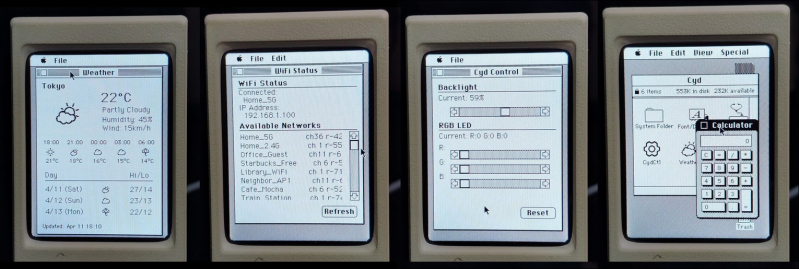
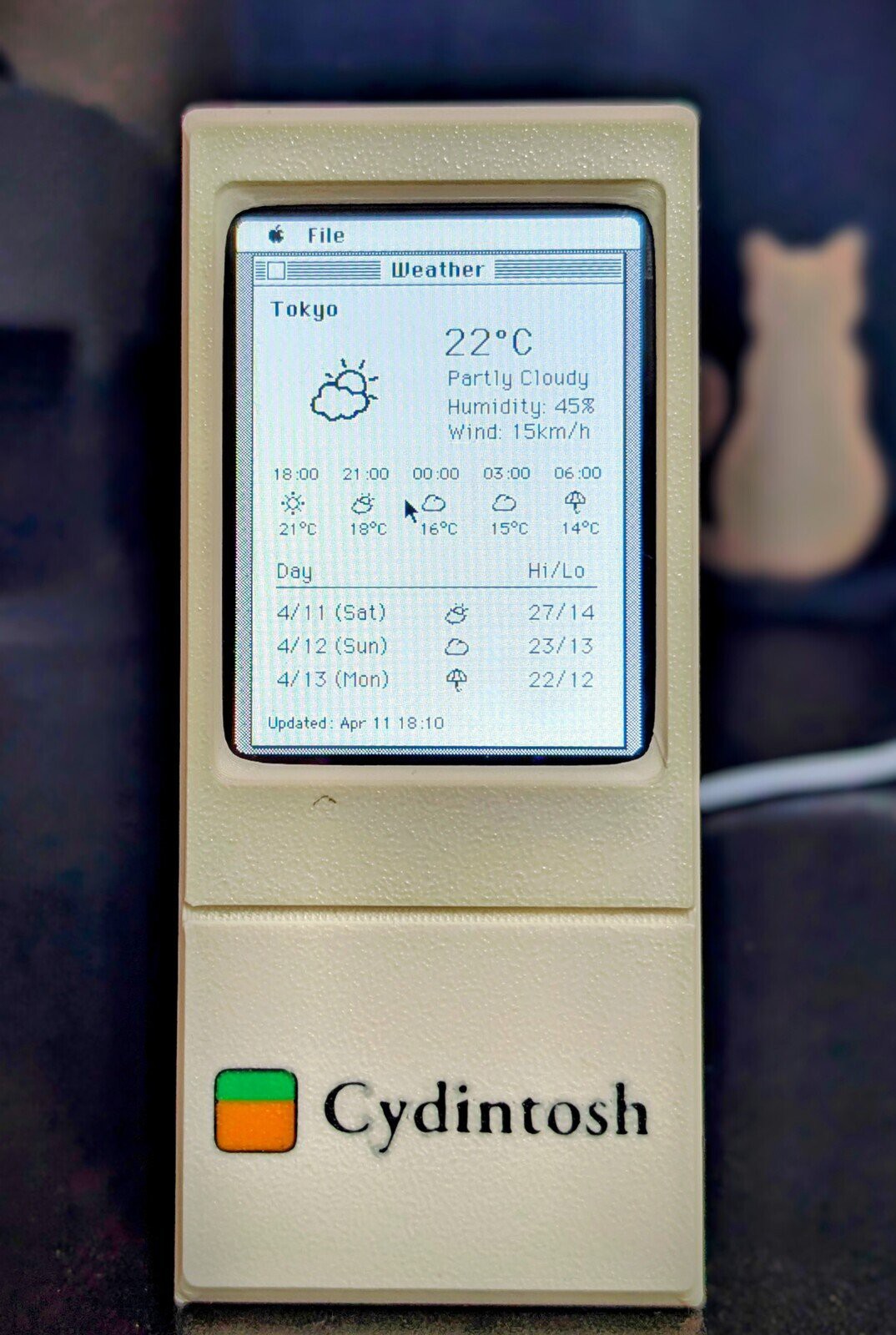
It seems like everybody takes their turn doing an ESP32-based weather display, and why not? They’re cheap, they’re easy, and you need to start somewhere. With the Cheap Yellow Display (CYD) and modules like it, you don’t even need to touch hardware! [likeablob] had the CYD, and he’s showing weather on it, but the Cydintosh is a full Macintosh Plus Emulator running on the ESP32.

Honey, I stretched the Macintosh!

The weather app is his own creation, written with the Retro68k cross-compiler, but it looks like something out of the 80s even if it’s getting its data over WiFi. The WiFi connection is, of course, thanks to the whole thing running on an ESP32-S3. Mac Plus emulation comes from [evansm7]’s Micro Mac emulator, the same one that lives inside the RP2040-based PicoMac that we covered some time ago. Obviously [likeablob] has added his own code to get the Macintosh emulator talking to the ESP32’s wireless hardware, with a native application to control the wifi connection in System 3.3. As far as the Macintosh is concerned, commands are passed to the ESP32 via memory address 0xF00000, and data can be read back from it as well. It’s a straightforward approach to allow intercommunication between the emulator and the real world.

The touchpad on the CYD serves as a mouse for the Macintosh, which might not be the most ergonomic given the Macintosh System interface was never meant for touchscreens, but evidently it’s good enough for [likeablob]. He’s built it into a lovely 3D printed case, whose STLs are available on the GitHub repository along with all the code, including the Home Assistant integration.

Read the whole story
satadru
2 days ago
reply
Adorable.
New York, NY
Share this story
Delete

My German Friend Told Me About “Stammstich,” and It Changed My Life

1 Comment and 2 Shares
It helps combat loneliness. READ MORE...
Read the whole story
mareino
2 days ago
reply
A great idea. I've been trying to do a Stammtisch in my office -- a little work free time to encourage people on unrelated teams to socialize.
Washington, District of Columbia
satadru
2 days ago
reply
New York, NY
Share this story
Delete

The Once-Common Bathroom Feature Disappearing from Homes

1 Comment
This is so interesting. READ MORE...
Read the whole story
satadru
2 days ago
reply
We love medicine cabinets so much we're adding a second one in our apartment remodel.
New York, NY
Share this story
Delete
Next Page of Stories